
Chapter 1: Awakening – The Prelude from Preservation to Rebirth
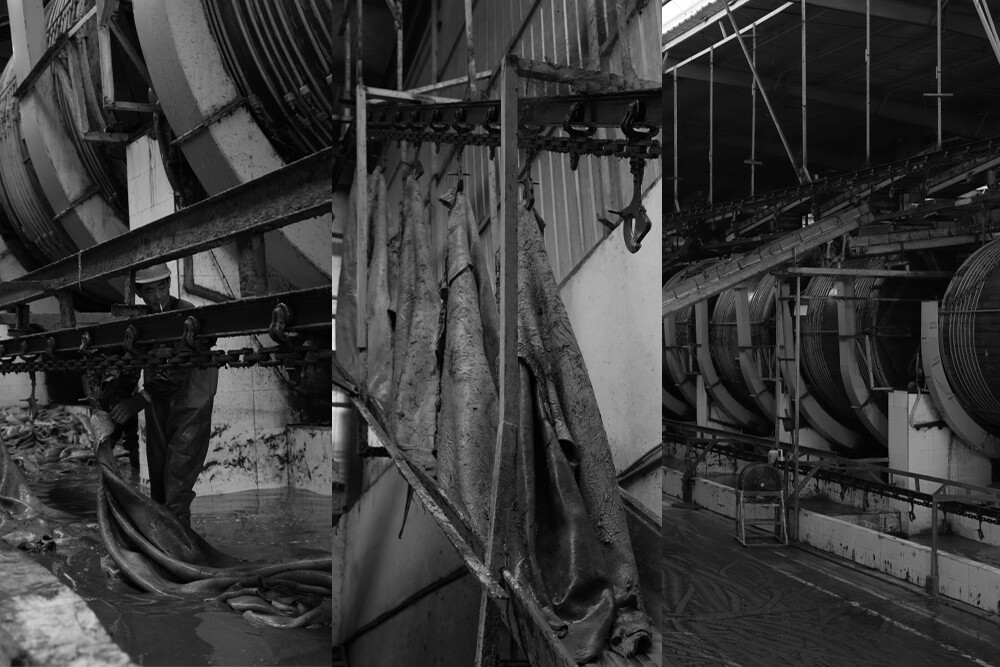
The creation of a leather piece begins with "dehairing" and "softening."
The first step in sending raw hides to the tannery is soaking. Workers wash away blood and salt from the hides, gently restoring them to their soft state just after being removed. Next, hair and the outer layer are carefully removed using mild lime water or enzyme preparations.
At this stage, the hide is known as "raw hide." No longer an animal's outer layer, it becomes a blank slate waiting to be given a new destiny.
Chapter 2: Alchemy — The Gentle Embrace of Plant Tannins
The soul of vegetable-tanned leather lies in nature's plants.
Standard leather is commonly chrome-tanned, achieving chemical tanning in just a few days. Vegetable-tanned leather, by contrast, adheres to time-honored traditions—Vegetable-tanned with pure plant extracts。
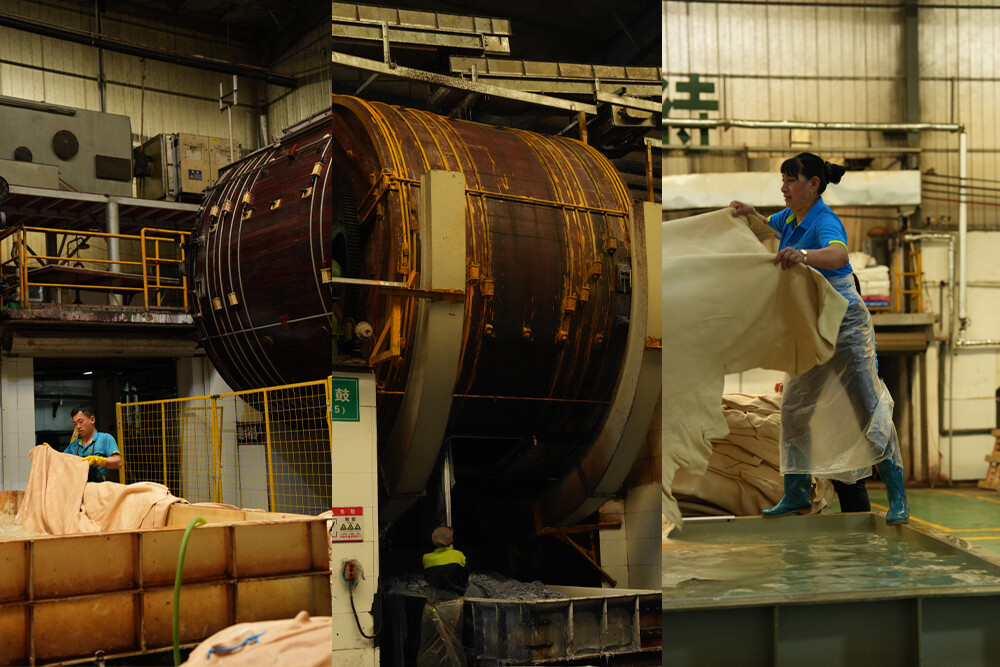
Artisans infuse tannin—a natural plant polyphenol—layer by layer deep into the leather's fibers, extracting it from European chestnut, mimosa (macadamia), larch, or red bark.
This process is like brewing a fine vintage wine—patience is essential. The hides are immersed in tannin baths of varying concentrations for periods ranging from weeks to months. Plant extracts seep into the hide, binding tightly with collagen fibers. Through this slow transformation, raw leather that would otherwise rot is fully tamed, becoming durable, firm, and infused with a natural, woody aroma.
Chapter 3: Shaping and Nourishing — The Craftsman's Touch and the Oil
After drumming, vegetable-tanned leather remains a rough semi-finished product. The next steps are "fatliquoring" and "finishing" to give it life.
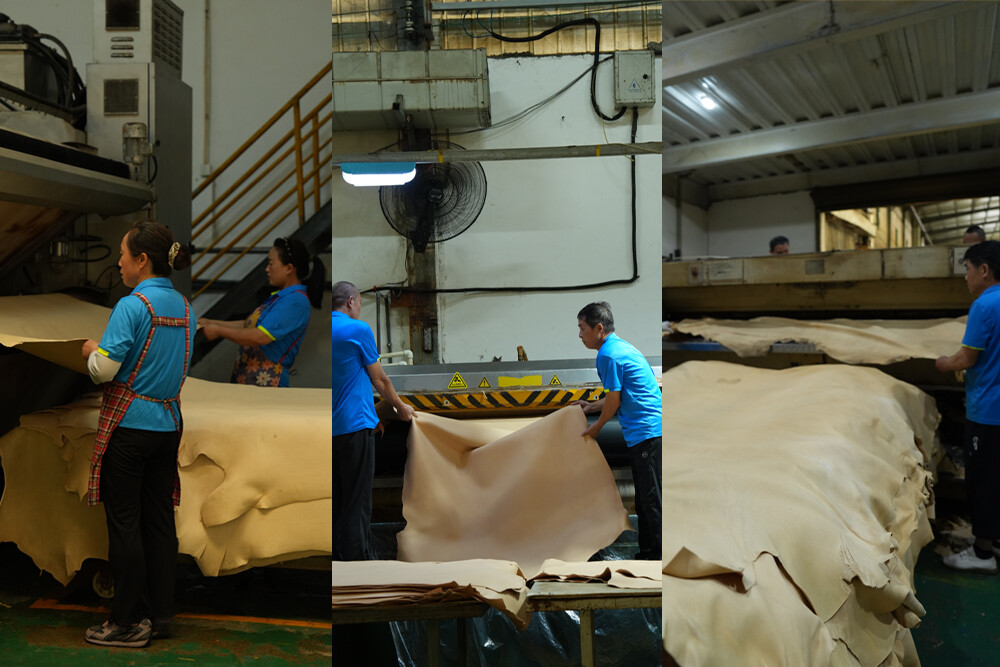
Artisans nourish the leather with beef tallow or natural animal fats based on its intended use. Like rain soaking dry soil, the oils bind within the fibers, giving the leather a sturdy structure while maintaining supple flexibility.
Next come drying, setting, and calendering. In this stage, vegetable-tanned leather reveals its unique characteristics—PlasticityOnce it touches water, it becomes pliable like clay and can be molded into any shape; once dry, it hardens like armor. This is why top-tier hand-carved leather goods, vintage backpacks, and vegetable-tanned watch straps always feature striking, three-dimensional lines.
Chapter 4: An Unfinished Birth – Life Coexisting with Time
When a vegetable-tanned leather piece finally rests on the display shelf, its true journey has just begun.
Unlike other chemically tanned leathers, vegetable-tanned leather is "alive." Because it isn't sealed by thick chemical coatings, it retains its natural pores and grain.
Once it's in your hands, exposure to sunlight, air oxidation, and the oils from your touch will transform it like an antique that has been lovingly polished. Its color will gradually deepen, developing a warm, jade-like luster. Even every mark of use and accidental scratch will be subtly absorbed, eventually evolving into a unique, deep honey-gold hue.
How is a single piece of leather made?
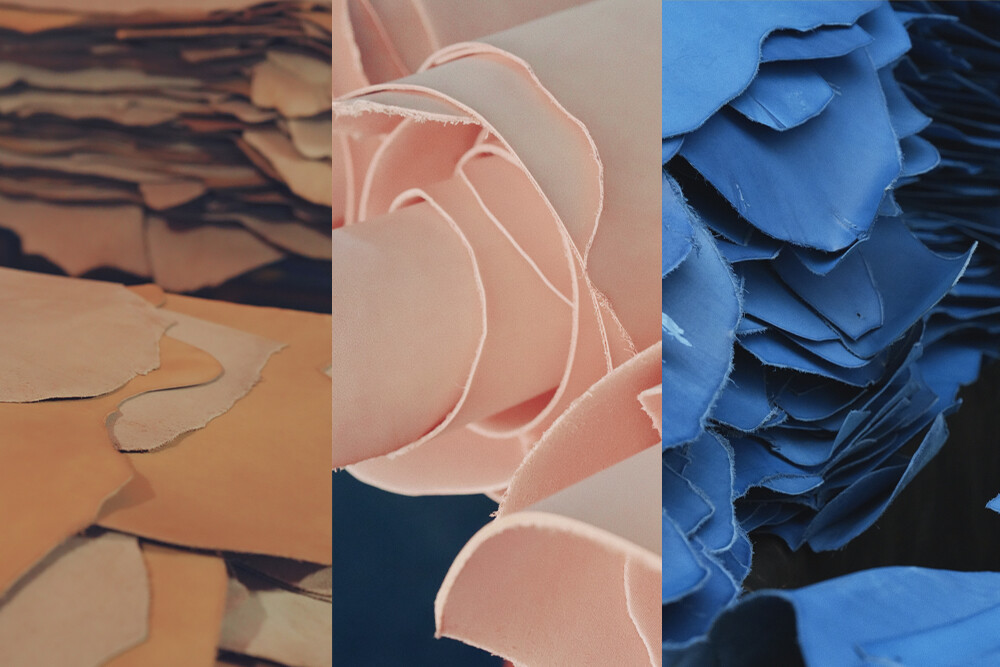
Born from nature, refined through botanical essence, shaped by master artisans, and brought to its most vibrant life in your hands.